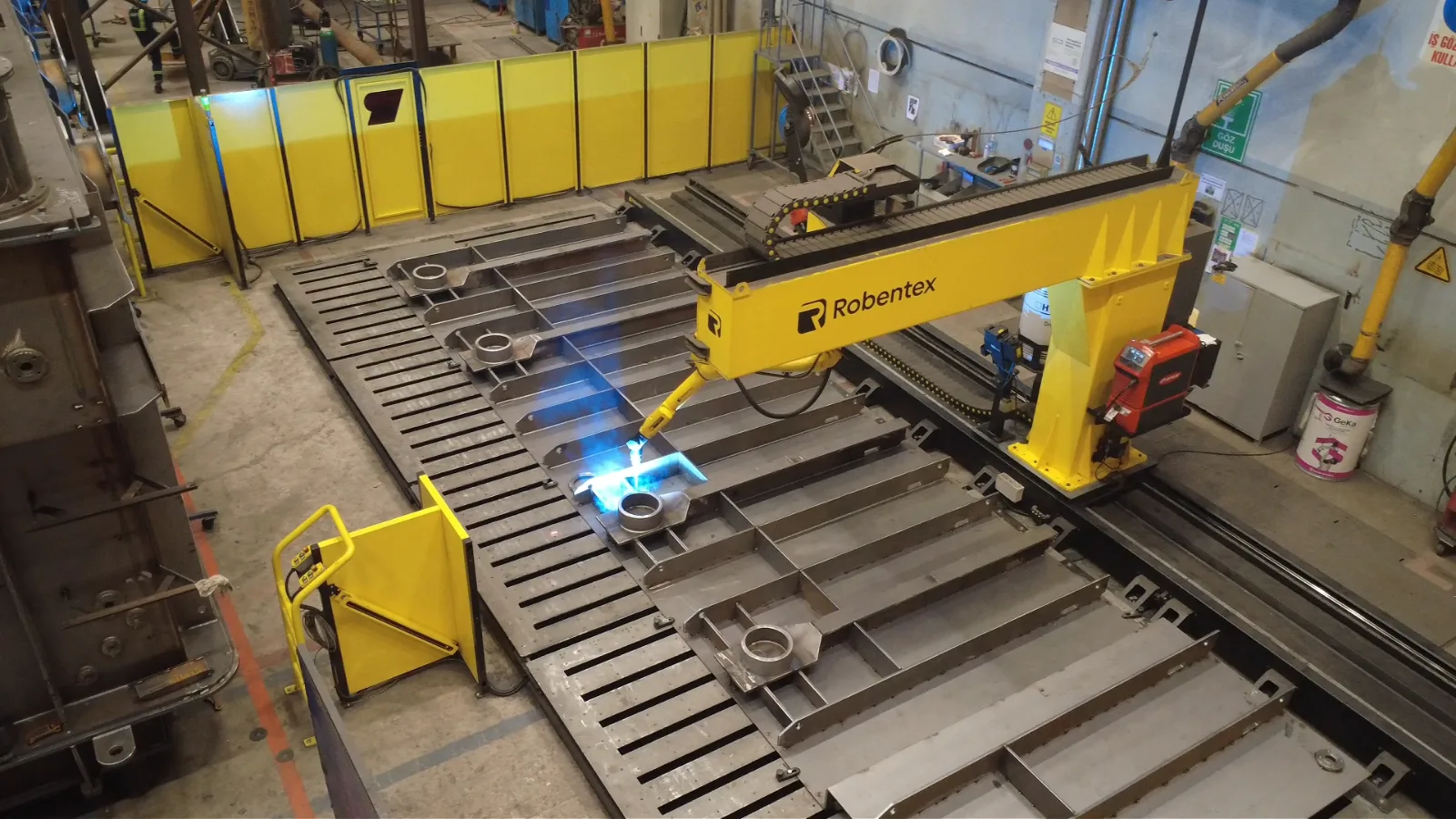
Turnkey Engineering in Welding Automation
Robentex unites welding engineering, robotics, software and field service under single-point project responsibility.
More than a decade of field experience in welding automation.
Founded
Systems Commissioned
Domestic and export projects
Engineers & Technicians
Engineering, manufacturing and field teams
Export Ratio



































Robotic Welding Solutions for Heavy Industry
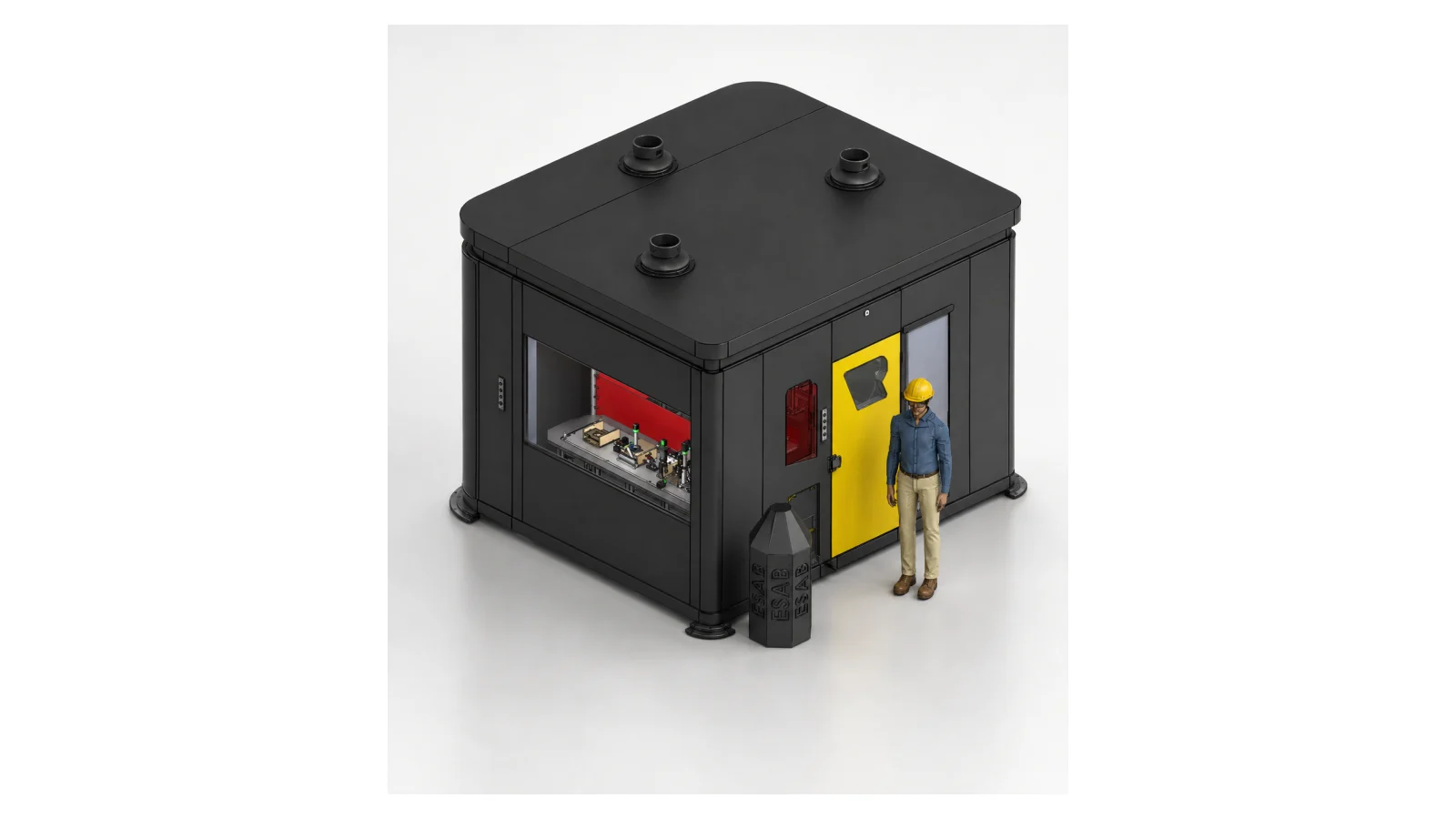 Robotic Welding Cells
Compact, enclosed single or synchronized dual-robot welding cells for heavy parts and serial production.
- Robot Reach
- 1,800 – 3,100 mm
- Positioner Integration
- 2-Axis Servo
- Target Seam Quality
- ISO 5817 Class B
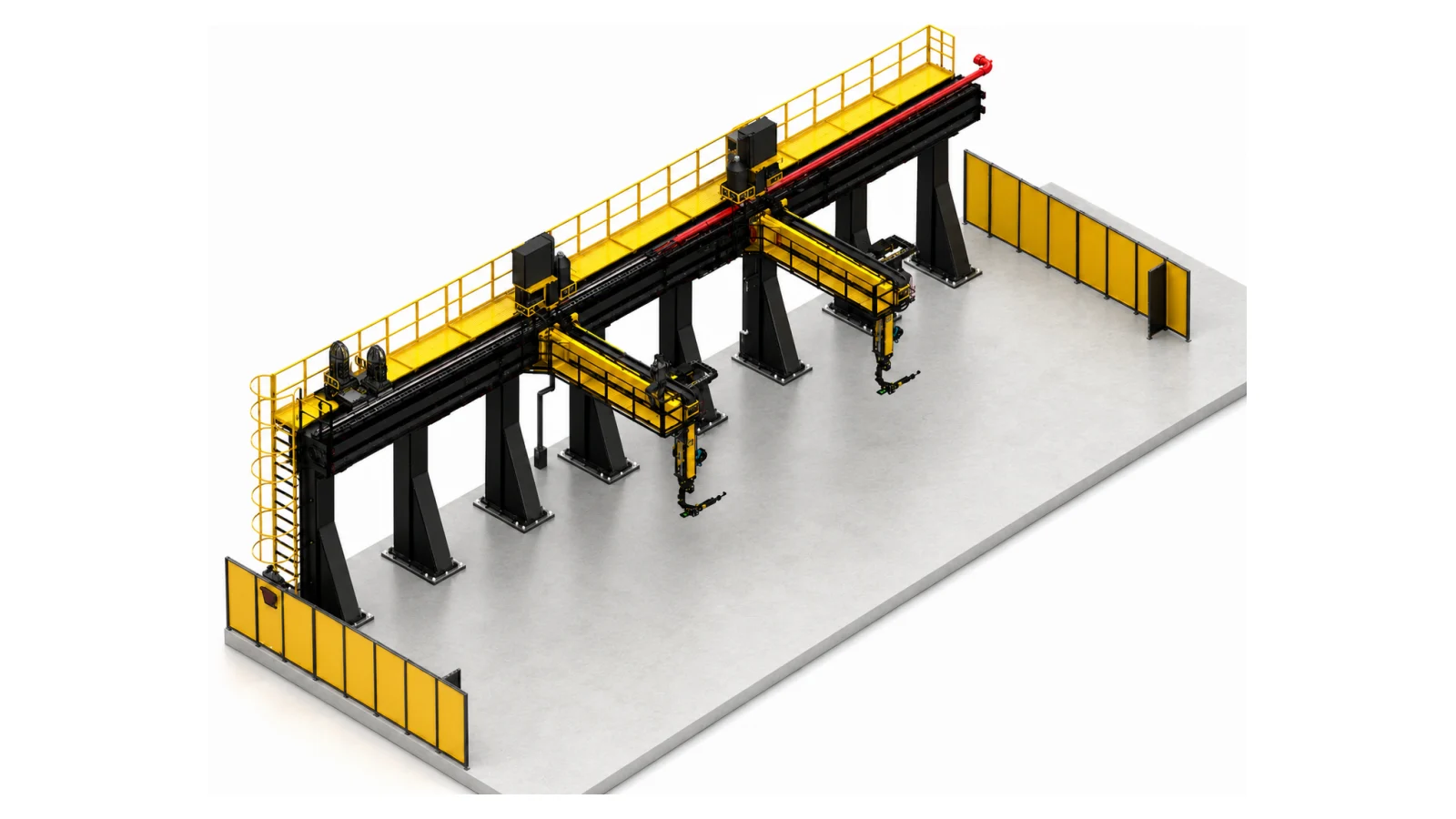 Portal & Gantry Systems
Project-specific gantry systems that carry the robot to the workpiece for ship panels, transformer tanks and heavy steel.
- Axis Length
- 12–36 m
- Torch Configuration
- Single / Synchronized Dual
- Sensing
- 3D Laser Seam Finding
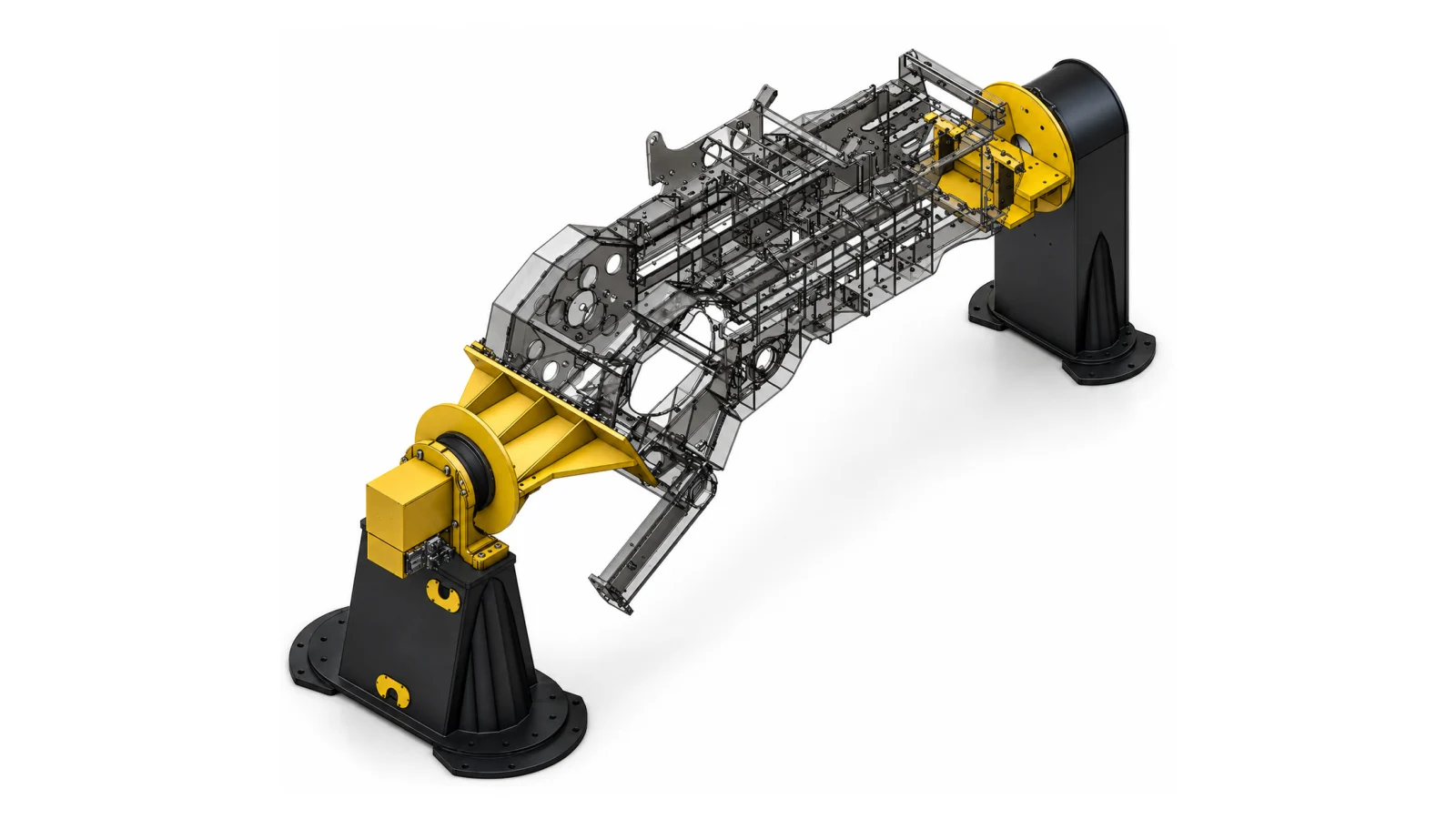 Welding Positioners
Servo-axis positioners bringing workpieces from 1 to 25 tonnes into the ideal welding position.
- Capacity
- 1,000 – 25,000 kg
- Configuration
- L-Type / H-Frame
- Synchronization
- Fully coordinated with robot
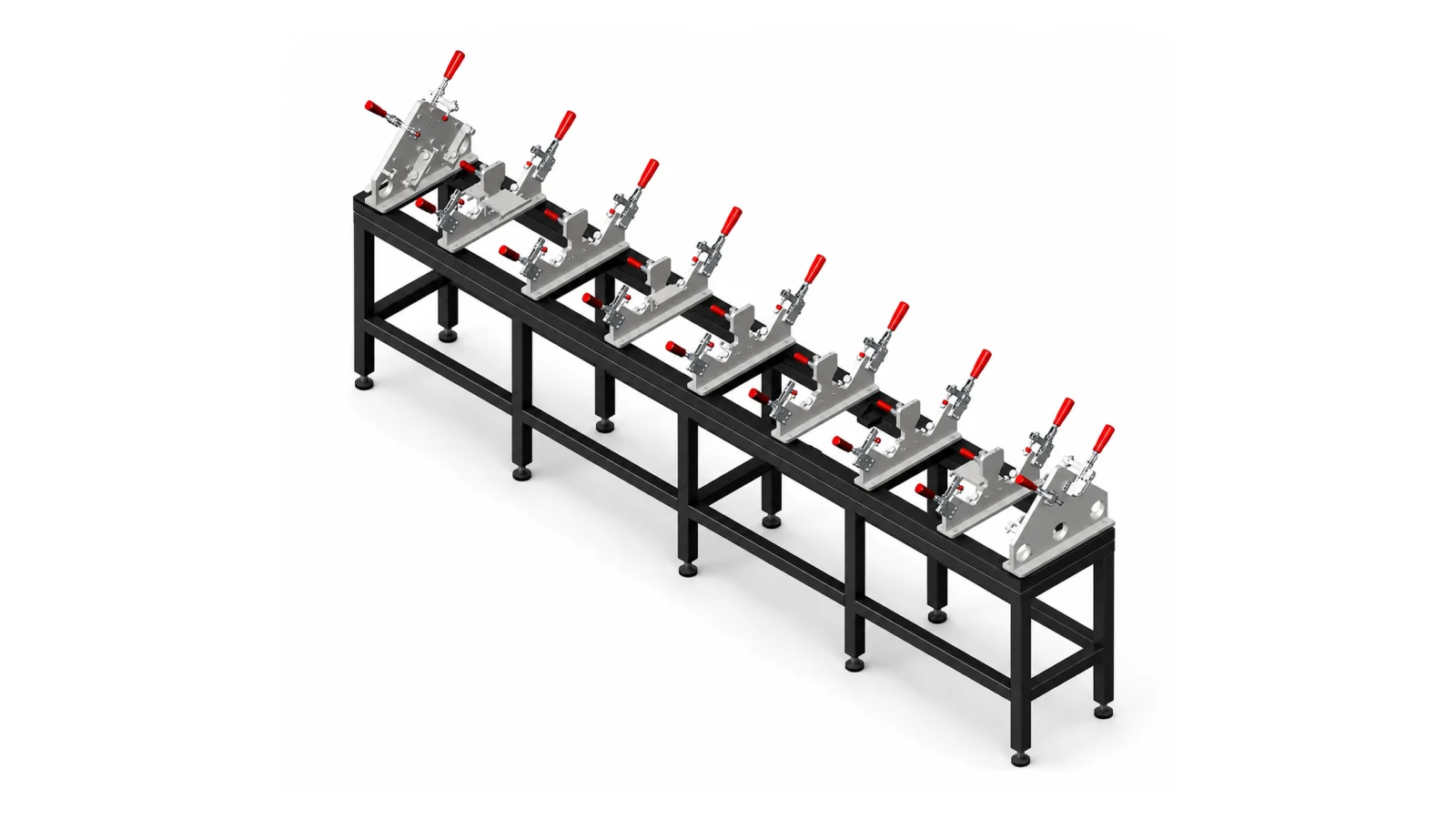 Fit-Up & Welding Stations
Assembly stations providing precise fit-up and tack welding with pneumatic and hydraulic fixturing.
- Clamping
- Pneumatic / Hydraulic
- Fixturing
- Quick-change
- Objective
- Repeatable fit-up
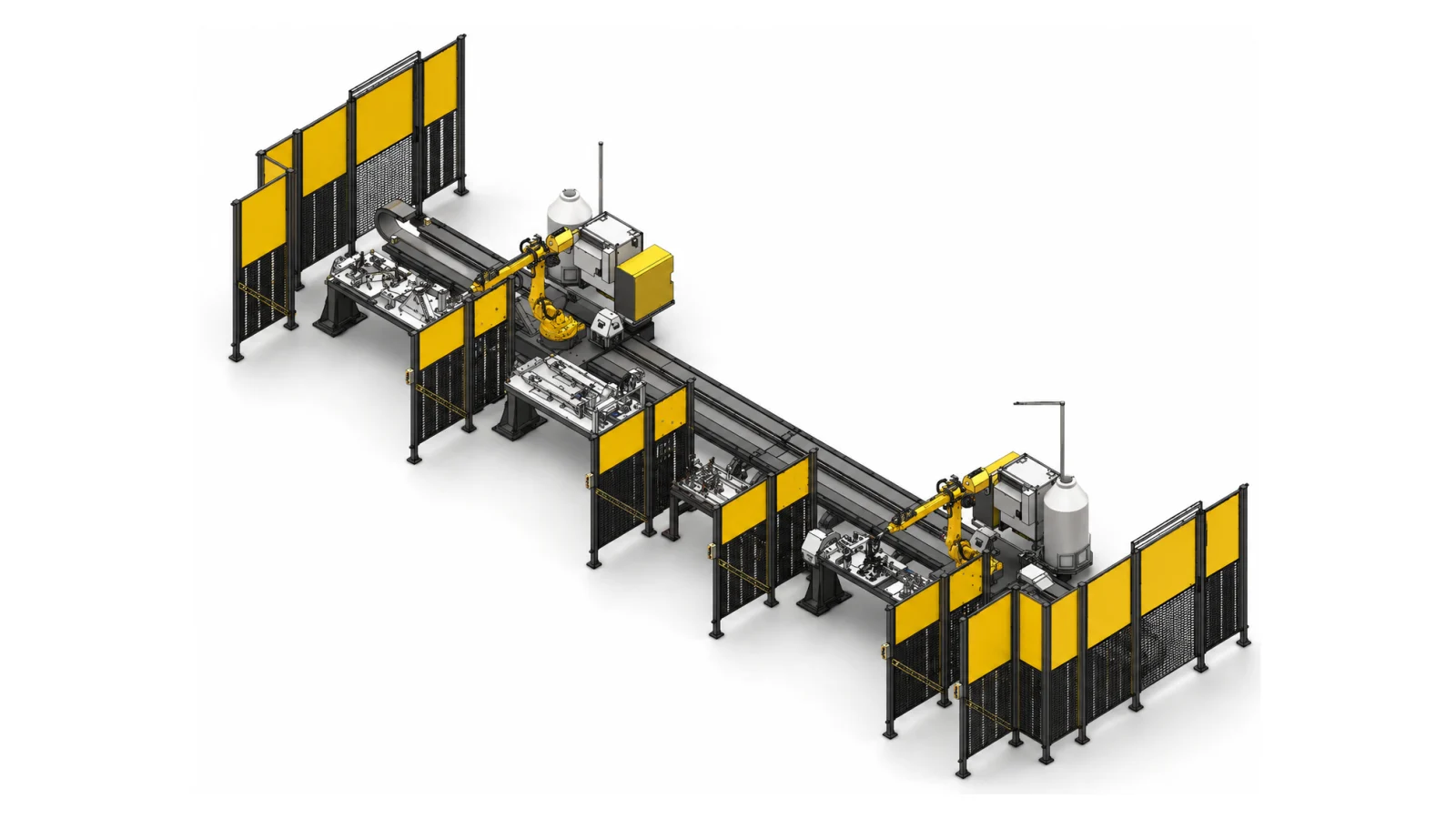 Custom Welding Lines
Turnkey production lines designed around your factory layout with integrated conveyors and automation.
- Scope
- Turnkey line
- Integration
- PLC / HMI / Conveyor
- Validation
- 3D simulation + FAT
It's Not the Robot. It's the Software.
From offline programming to weld data traceability: six technology layers that form the cell's intelligence.
Offline Programming (OLP)
Robot programs are prepared on the cell's digital twin without stopping production. Weld paths are derived from CAD; collision and reach are validated virtually.
- STEP / IGES CAD import
- Brand-agnostic robot code generation
- Reach and collision analysis

Laser Scanning & Adaptive Welding
Pre-weld laser scanning measures the part as built and the scan path is simulated on screen in real time. From that measurement the software automatically recomputes pass count, pass sequence and welding parameters; no manual programming. Even when heat distorts the part mid-weld, laser tracking keeps the torch aligned to the shifting joint; with no reprogramming, the robot welds the real part in front of it rather than the theoretical model.
- Weld groove geometry measurement
- Root gap and misalignment detection
- Path offsetting against the real part
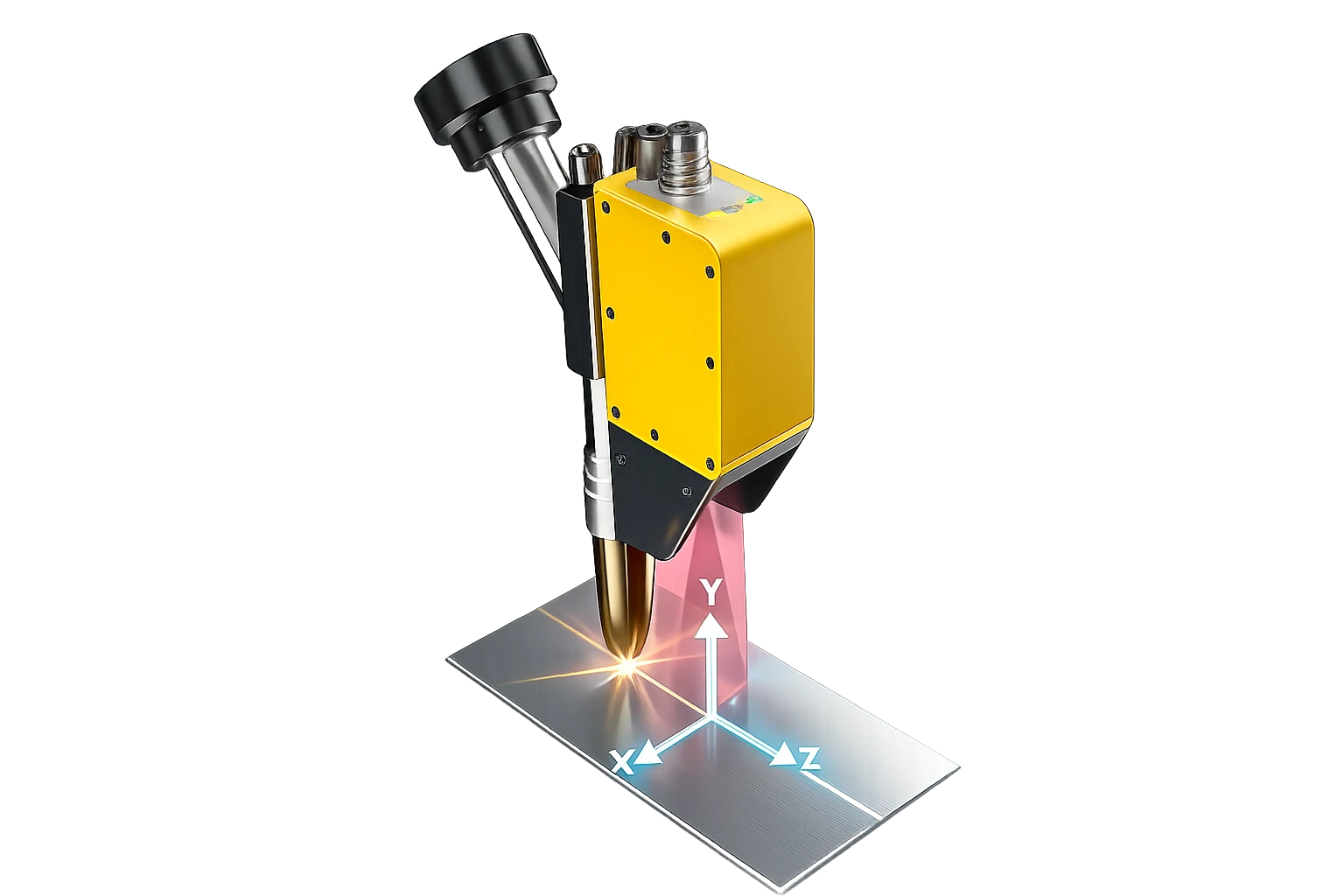
Seam Tracking
The sensor watches the joint ahead of the torch throughout the weld; deviations caused by thermal growth and fixture tolerance are corrected live. Even if the part bends or shifts slightly, the robot is never reprogrammed; the weld path stays true from start to finish on long seams.
- Optical seam tracking sensors
- Arc-glare-resistant filtering
- Tack-weld skipping algorithms

Cell Management
The entire cell is run from a single operator panel; part recipe, program selection, safety state and fault diagnostics are gathered on one screen. On a product change the operator picks a stored recipe instead of writing a new program, and on a fault the panel shows the source separately (robot, PLC, power source); troubleshooting starts without waiting for a service visit.
- Part recipe and variant management
- PLC / robot / power source integration
- Remote diagnostics link: performance data and log access for pre-diagnosis before a site visit

Weld Data & Traceability
ArcTab makes the robotic welding operation visible: live welding data, program and weld history, operator performance and period comparisons in one platform.
- Live robot status and active program tracking
- Real-time current, voltage, wire feed and travel speed
- Per-seam parameter logging

Parametric Robot Programming
No separate program is written for each size in a product family. The operator enters the dimensions and the robot program is generated from them.
- Weld path defined as a function of dimensions
- Parameter entry from the operator panel
- Pass count computed automatically from thickness
Which Industry Do You Build For?
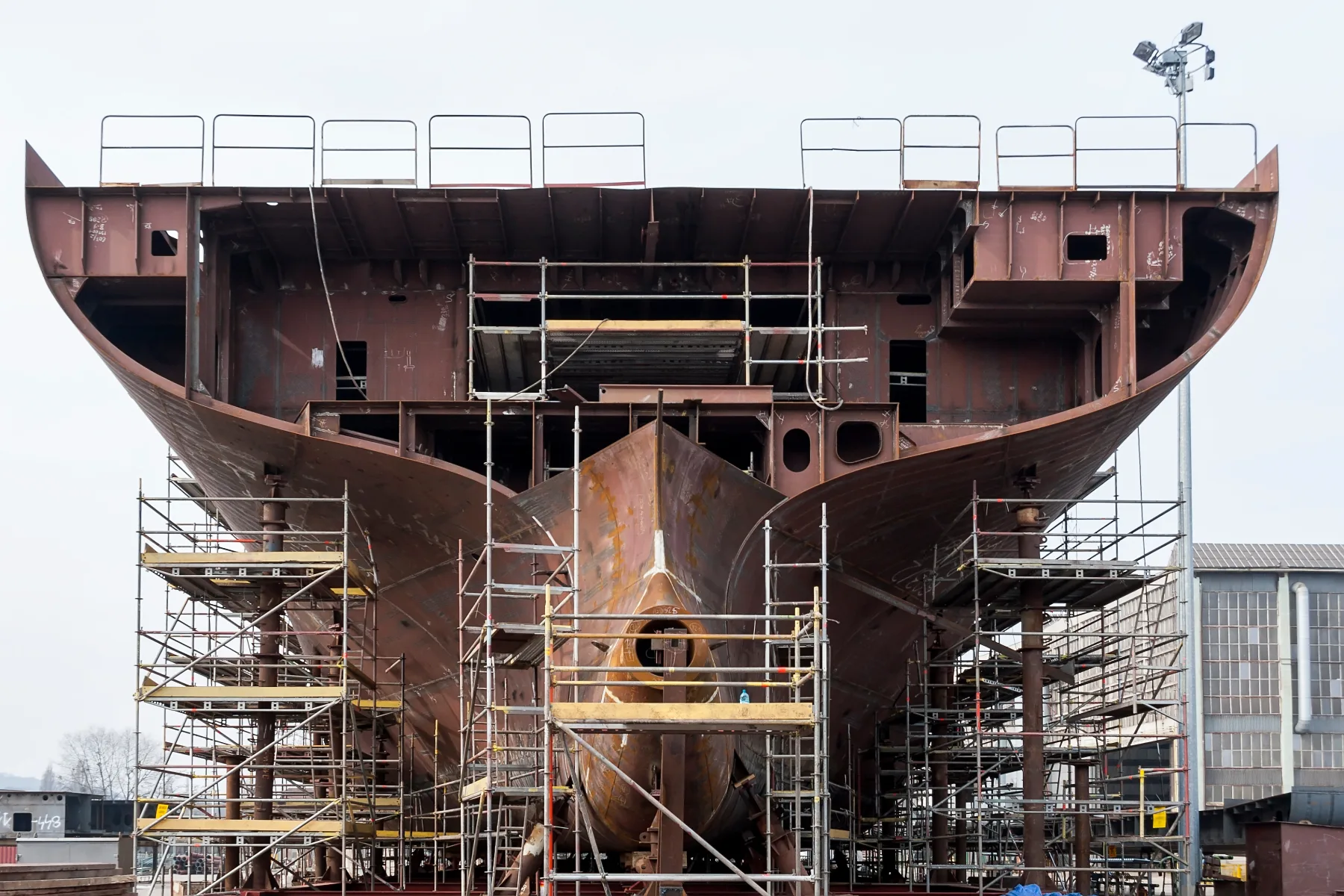


Selected Project Cases
-
 Best Transformer · Energy 2025
Best Transformer: 8-Axis Gantry Welding Cell for Transformer Side Walls
An 8-axis gantry cell welding transformer tank walls up to 15 metres long. Programs are prepared with AutoCAM Moses in 15–20 minutes per part, without stopping the line.
- 8-axis gantry robotic welding cell
- FANUC robot integration with synchronized gantry axes
- AutoCAM Moses offline programming with CAD integration
- Program transfer from the operator panel
-
 Birim Makina · Heavy Industry 2025
Birim Makina: Dual-Robot Gantry Welding System on a 24-Metre Slider
Two FANUC robots in a 9-axis configuration on a single 24-metre slider. Programs are prepared offline with AutoCAM Moses; programming time dropped by up to 80% and production time by up to 50%.
- A continuous 24-metre floor slider track
- Collision-free simultaneous dual-robot kinematics
- AutoCAM Moses offline programming (both robots from one computer)
From Site Survey to Service: 11 Steps
-
Site Survey
Layout, part flow and utilities are surveyed on site.
-
Welding Trials
Sample welds are run on your actual parts.
-
3D Simulation
Cell layout and cycle time are validated virtually.
-
Quotation
Scope, schedule and acceptance criteria are defined.
-
Design
Mechanical, electrical and software design under one roof.
-
Manufacturing
The system is fabricated and assembled at Robentex.
-
FAT
Factory acceptance testing runs on your real parts.
-
Site Installation
The system is shipped, installed and calibrated on site.
-
Commissioning
Commissioned under production conditions with welded-part acceptance.
-
Operator Training
Your team is trained in operation, maintenance and programming.
-
Service
Spares, maintenance and field support keep the system running.
Single Supplier. Single Responsibility.
In robotic welding projects the trouble rarely sits in the machine; it sits in the gaps between suppliers: the robot from one company, the fixture from another, the software from a third. When the part fails, everyone points elsewhere. At Robentex every step, from the welding procedure to field service, belongs to the same team.
Robentex
One responsibility-
Project ownership
One contract, one owner: mechanics, electrics, robot, welding procedure and software in one team.
-
Welding engineering
WPS/WPQR, process selection and joint design are done in house; the automation is built on those decisions.
-
Acceptance testing (FAT)
The system passes acceptance testing at our facility on your real parts before it ships.
-
Operator training
Your welder is trained on site after installation, to the point of running the robot alone.
-
Service & spare parts
The service team and critical spares are in Türkiye; response is planned from the same country.
Multi-supplier model
Split responsibility-
Project ownership
Robot, fixturing and software sit in separate contracts; the work in between belongs to no one.
-
Welding engineering
The welding procedure is outsourced to consultants; when scrap appears, accountability splits.
-
Acceptance testing (FAT)
Acceptance is usually run on representative parts; surprises surface during commissioning.
-
Operator training
Training is scattered across suppliers; dependence on an external programmer remains.
-
Service & spare parts
The service engineer and the part are awaited from abroad; downtime stretches.
The right-hand column describes a common way of working in the industry, not a specific company.
Tell Us What You Need to Produce, Let's Define the Right Solution Together.
We run trial welds on your own parts in our welding lab and come back with a feasibility report.